

Grant funds better pathways for emerging battery sector roles
An important applied research project has identified that recognition of existing trade skills and targeted upskilling could help accelerate emerging workforce needs.
As battery and clean energy technologies become increasingly integrated across Australian industries, demand is growing for workers with the specialised skills needed to install, maintain and operate these systems. To help meet this demand, TAFE Queensland Commercial received a grant through round one of the TAFE Centre of Excellence Clean Energy Batteries Applied Research Grants Program to deliver the Pathways to Emerging Occupations for Battery and Clean Energy Technologies project.
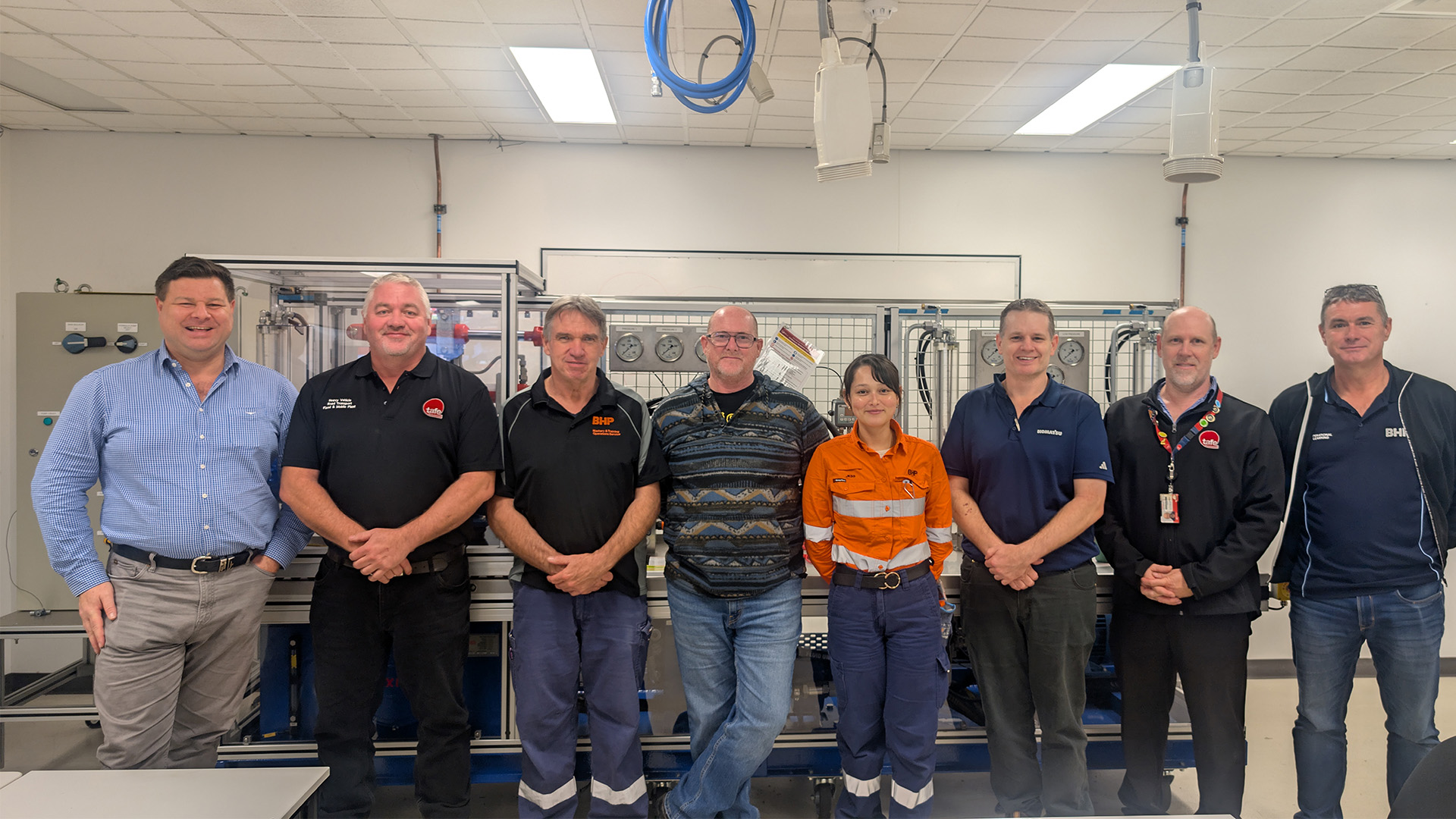
Throughout the research, TAFE Queensland Commercial collaborated with BHP, the Australian Mining and Automotive Skills Alliance (AUSMASA), and a range of industry and education stakeholders. Together, they explored how training pathways can better support workers transitioning into battery and clean energy technology roles.
The project identified an opportunity to create clearer pathways between existing training frameworks. Many workers currently gain their qualifications through the Manufacturing and Engineering (MEM) Training Package, while additional competencies relating to electric vehicles (EV), high-voltage (HV) systems, diagnostics and emerging battery technologies are more commonly delivered through qualifications and skill sets within the Automotive Retail, Service and Repair (AUR) Training Package.
Although both training packages include relevant electrical and diagnostic capabilities, they are developed through different pathways and industry contexts. This can make it difficult for experienced tradespeople to access the additional competencies needed to transition into clean energy, electrified mobile plant and battery-related roles.
One of the project's key objectives was to develop a nationally consistent and industry-validated pathway between MEM and AUR qualifications. The project explored how existing trade skills could be recognised while identifying the targeted training needed to equip workers with specialist knowledge in battery and clean energy technologies.
The research resulted in the development of a skills and occupations matrix that identified emerging roles and mapped the skills, knowledge and tasks required to perform them. The research also examined current workforce capabilities, future qualification requirements and skills gaps that need to be addressed to support the growing clean energy workforce.
Importantly, the project identified a viable transition pathway between certain qualifications within the MEM and AUR Training packages, finding that most units could be recognised through Recognition of Prior Learning (RPL), with only a small number of gap units requiring formal training. This demonstrated that workers already have the core skills needed for battery and clean energy technology roles and that targeted upskilling can help them transition.
The pilot also validated the RPL and gap-training model as practical, scalable and repeatable, providing a potential framework for broader industry adoption. By reducing duplicated training and accelerating pathways to competency, the model offers a more efficient approach to building the workforce needed to support Australia's growing battery and clean energy sectors.
With phase one of the research project now complete, phase two will focus on expanding and testing the pathway across multiple locations, including Western Australia and South Australia. Future work will also explore pathways into automotive electrical and electric vehicle qualifications, develop more nationally consistent approaches to high-voltage licensing and competency recognition, and create frameworks to support transitioning workers.
The TAFE Centre of Excellence Clean Energy Batteries is a joint initiative between the Australian Governments.