

Dale’s industry insights inspire the next musical generation
TAFE Queensland music students are learning from teachers who don’t just talk about the industry – they live it.
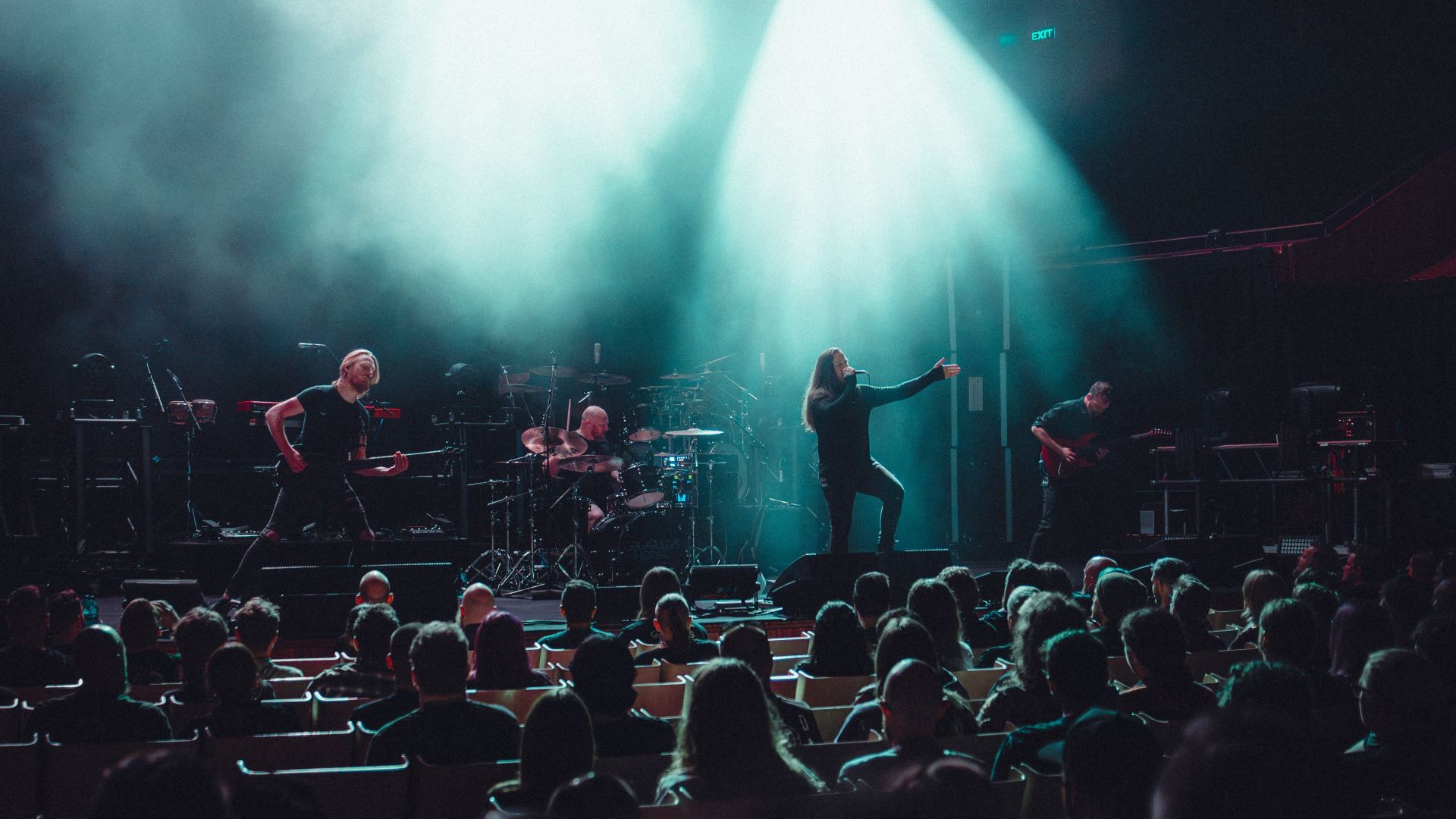
For bassist and touring musician Dale Prinsse, stepping off a festival stage in Europe or performing at the Sydney Opera House one night and walking into a TAFE Queensland classroom the next isn’t unusual.
For Dale, it’s part of bringing authentic, hard-earned industry experience straight to the next generation of musicians.
With over a decade of touring the world with progressive metal band Caligula’s Horse, Dale has shared the stage with Opeth, Dead Letter Circus, Cog, Tesseract, Monuments, and Osaka Punch, among others.
He says touring provides real-world lessons - venue etiquette, teamwork, conflict resolution, and practical communication - that textbooks often don’t cover. It’s this lived experience that he brings into the classroom.
Despite a schedule including performing at The Fortitude Music Hall and Melbourne’s Palais Theatre, he still finds himself immersed in marking, lesson planning, and mentoring students.
He jokes that he can be standing side-stage one night and back in the classroom the next morning, explaining why communication matters far more than the perfect Instagram strategy.
Dale’s skill set stretches well beyond musical performance. He works as a lighting designer, audio engineer, tour manager, videographer, and photographer.
He often reflects that many of these abilities were developed out of necessity because the industry moves so quickly; suddenly, a bassist becomes a content creator, a planner, a production manager, and a business partner.
He encourages students to broaden their thinking, reminding them that while it’s great to aspire to “just” be a singer or guitarist, that’s rarely enough at the start of a career.
As a TAFE Queensland teacher, Dale offers not only the perspective of a seasoned musician but also that of a researcher.
Having been a PhD candidate exploring how Artificial Intelligence influences music creation and consumption, Dale remains fascinated and cautious about how AI is reshaping creativity, believing there are valuable ways to utilise AI in music - they haven’t been fully explored yet.
When students ask about marketing, branding, or going viral, his approach is unapologetically practical.
He advises that putting effort into marketing a product before it's finished is usually not worthwhile and recommends prioritising songwriting, arranging, performing, producing, and learning to assess one's own musical work objectively.
Many students, he notes, can be their own harshest critics or overly confident because they’re having fun in a rehearsal room; he teaches them to find the middle ground where potential can be recognised and refined.
His philosophy centres on the idea that action precedes inspiration. In his view, taking action builds competence, competence builds motivation, and motivation eventually develops into inspiration.
This mindset shapes his teaching, which avoids rigid scripts in favour of a conversational, adaptable approach.
He prefers walking into class with a topic and a few key points, allowing the session to shift based on the needs of his students - something he feels more accurately reflects how the industry actually works.
Dale’s global touring career also sees him bring industry insights into the classroom. He regularly points out that moving abroad doesn’t make success easier; in fact, it often means starting from scratch with fewer contacts.
For sound production students, however, he encourages mobility because growth can happen quickly when they’re able to approach any band and offer live or studio production at mates’ rates.
He’s also open about the industry’s challenges, helping students understand what to expect before stepping into it.
One of the hardest things to teach, he says, is staying calm - students often catastrophise because they lack experience.
Some fear that a mistake can end their career or disrupt a show, so Dale prioritises teaching self-management over technical skills, believing longevity is more important than perfection.
For Dale, the work on stage and the work in the classroom aren’t separate; they’re deeply connected.
His understanding of local, international, and festival music scenes enables him to tailor his guidance to each student’s individual goals.
He believes that everyone has their own trajectory and sees his role not as pushing students toward one definition of success but helping them discover what success looks like for them.
Even with the demands of touring, academic work, and multiple creative roles, Dale remains energised by teaching.
For him, the most rewarding moments are when a student hears their idea come together, they stop second-guessing themselves and start seeing the potential in their own music.
Helping someone fall in love with what they create, he says, never gets old.
Photo credit Mel Jolley IG: @meljmedia