Students dig deeper into the science of healthy soil
TAFE Queensland horticulture students are getting hands-on with the science beneath our feet, building the practical skills needed to create healthy gardens, thriving turf areas and sustainable landscapes.
As part of the Certificate III in Horticulture (AHC30722), students are developing the skills and knowledge required to collect and test soil samples for their physical and chemical characteristics, and to take corrective action to improve soil conditions in garden beds and turf areas.
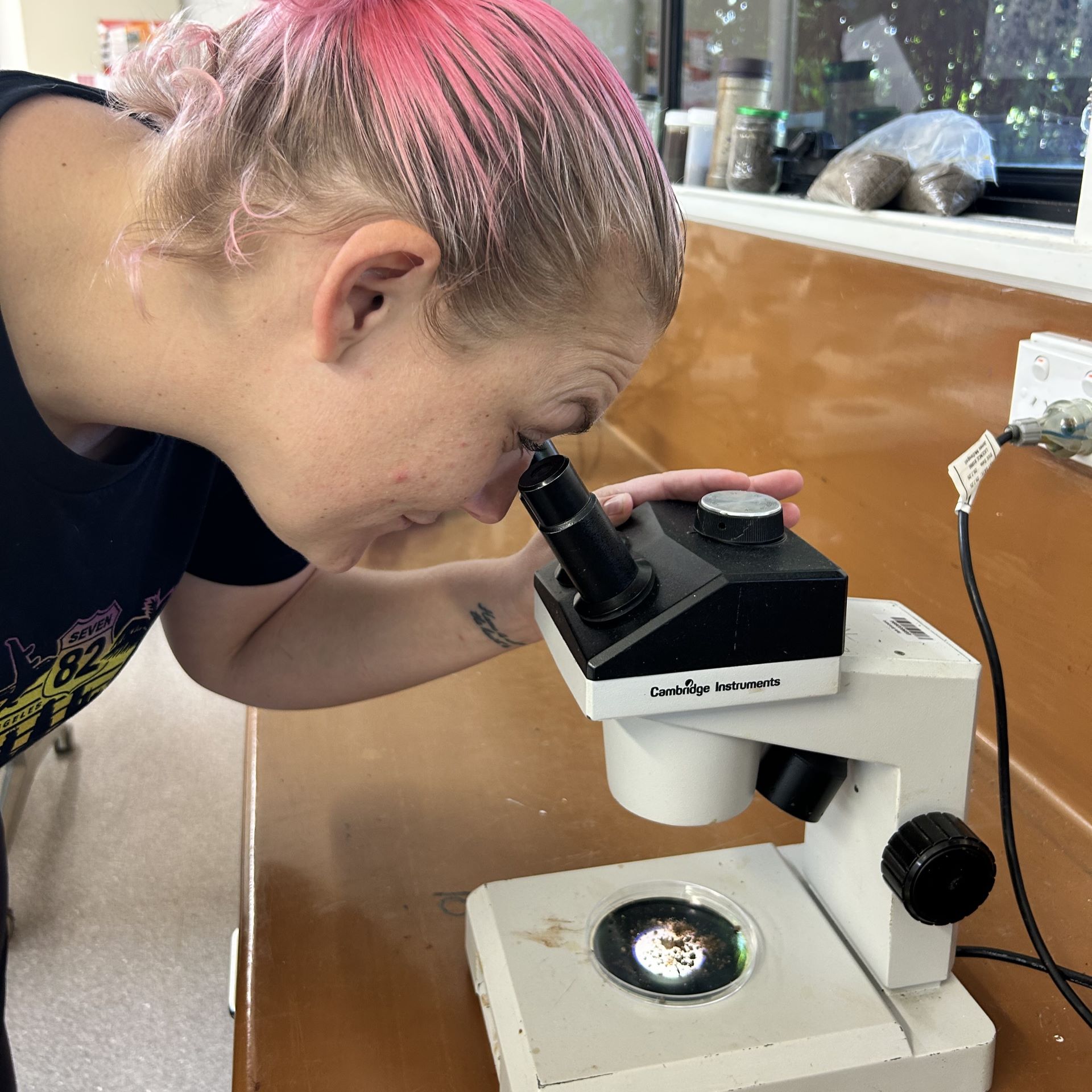
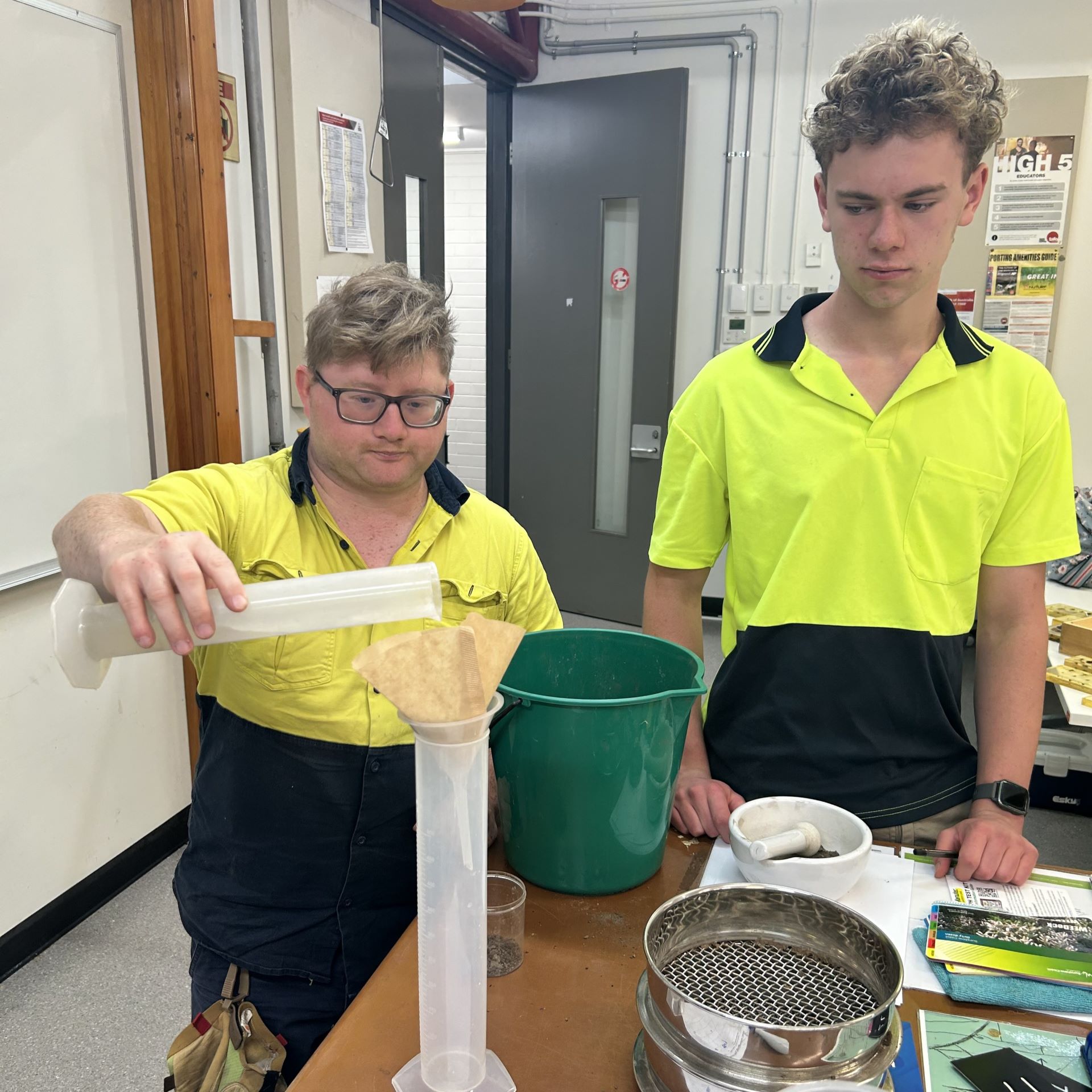
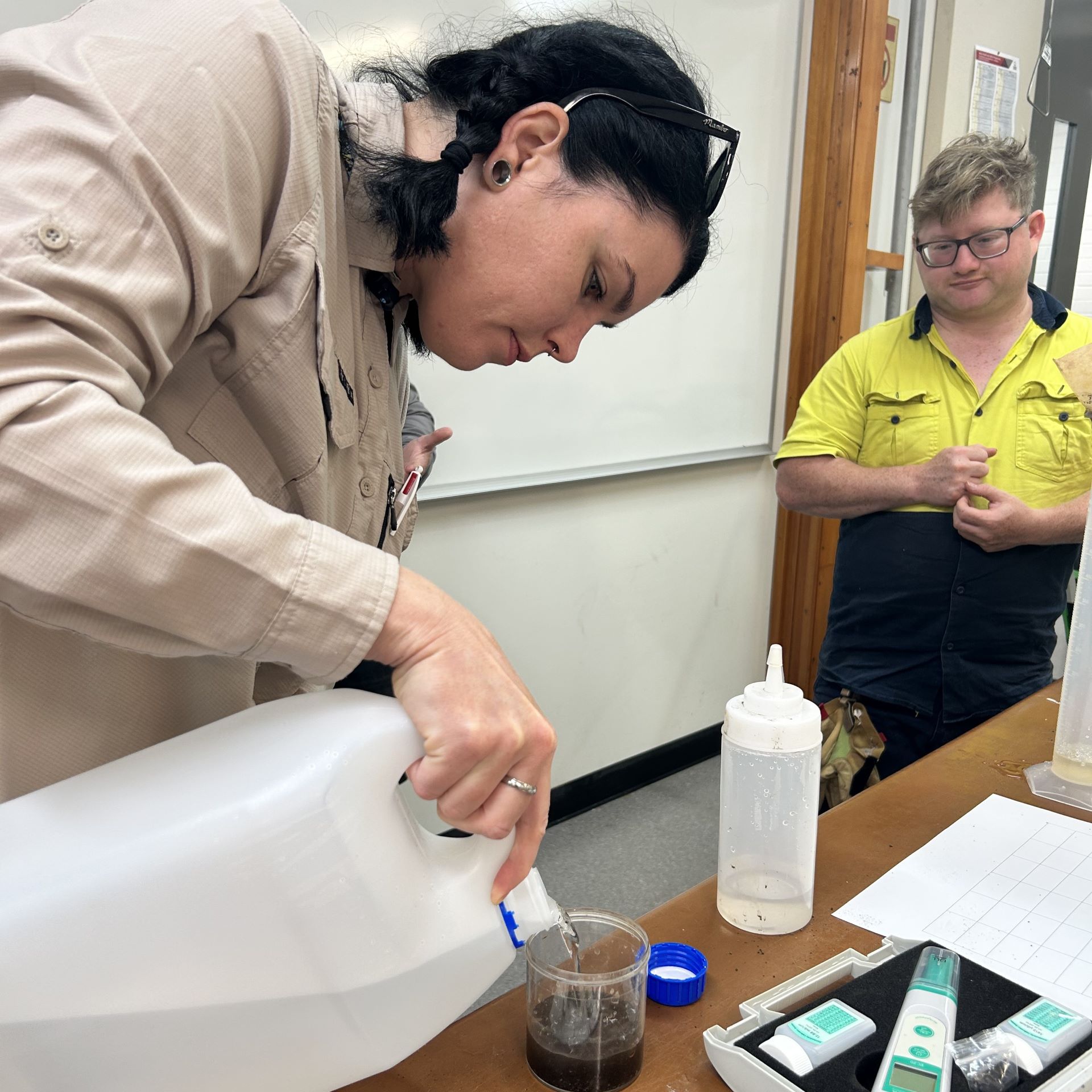
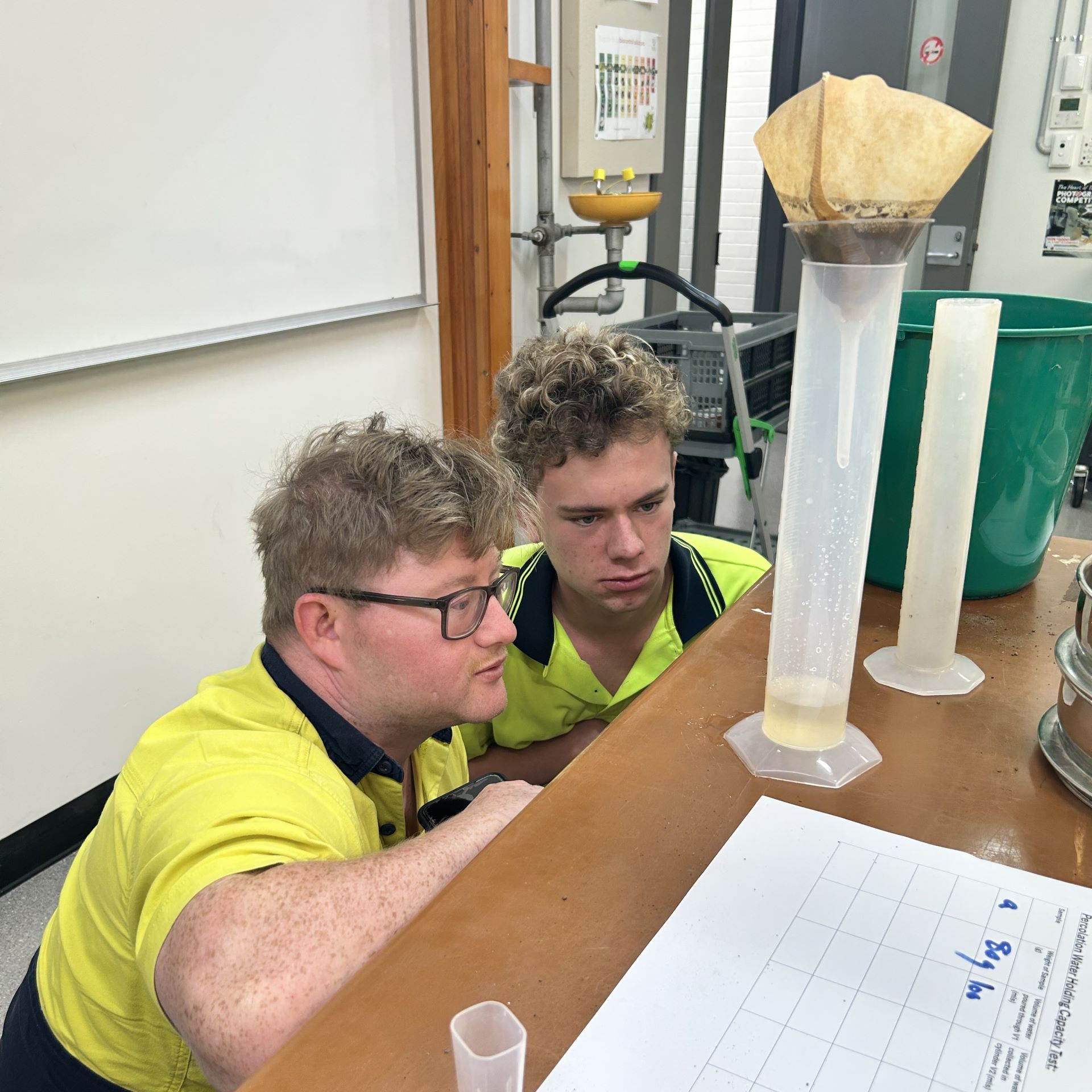
During a recent practical class, students Charlie, Taylor, Luke and Alex completed a series of tests at TAFE Queensland’s Grovely campus.
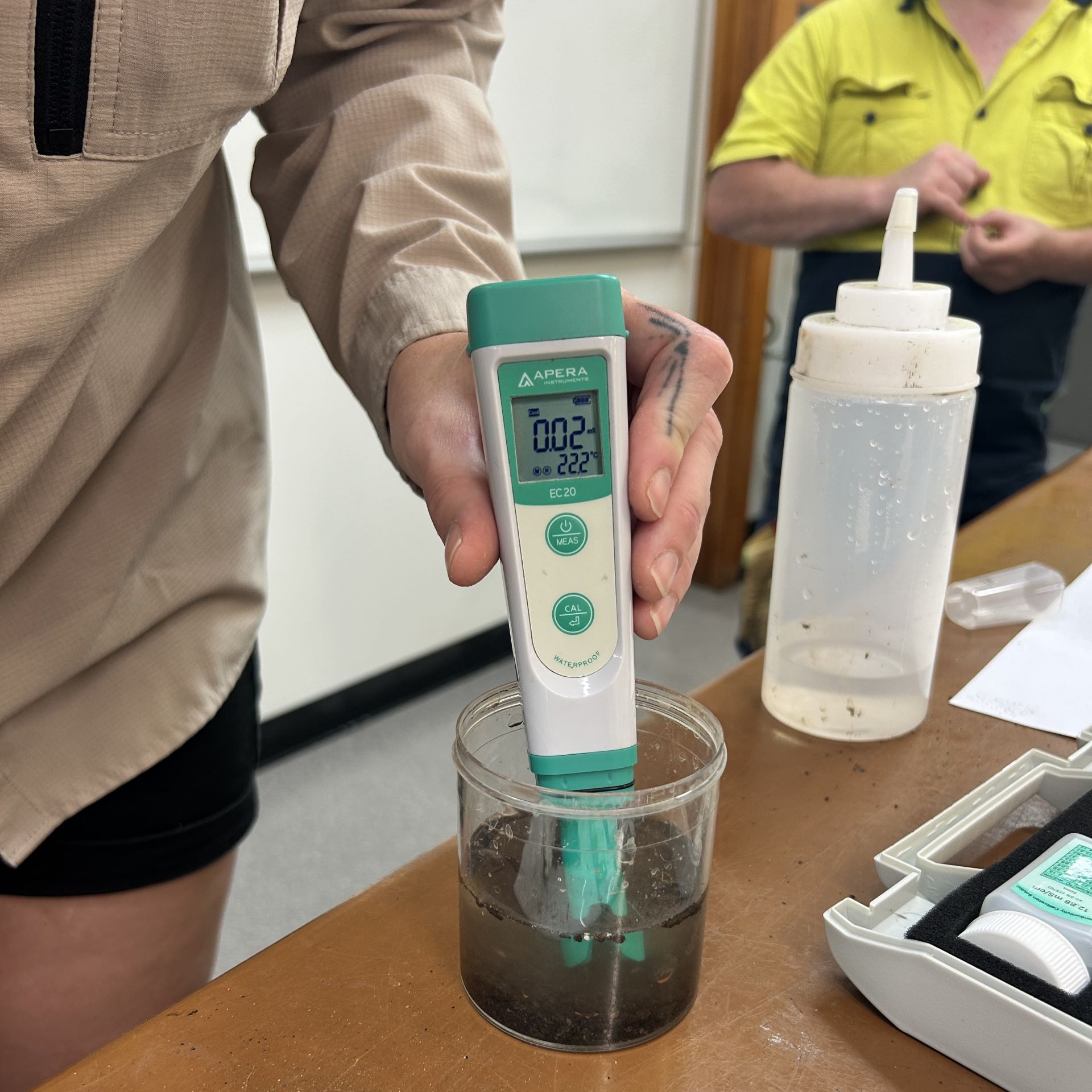
From water-holding capacity, pH, electrical conductivity (EC), and soil dispersion, the students gained valuable real-world experience in using science to assess soil health.
These tests help students measure key indicators such as moisture retention, acidity levels, nutrient availability and soil structure - all critical factors in supporting strong plant growth.
“Not all soils are the same,” explained Horticulture Teacher Amy Fazl.
By measuring the weight, volume and moisture percentage of soil samples, students can determine whether the soil is suitable for different plant types and root systems.
For example, highly sandy soil may allow water to drain too quickly, making it difficult for some plants to establish.
“If it’s too sandy, the water runs straight through it, so a plant may struggle to get what it needs,” she said.
The lesson also explored the importance of loamy soil, often considered ideal for many plants because of its balance of sand, silt, clay and organic matter.
Students learned how soil pH can directly impact plant health, with different species requiring different conditions.
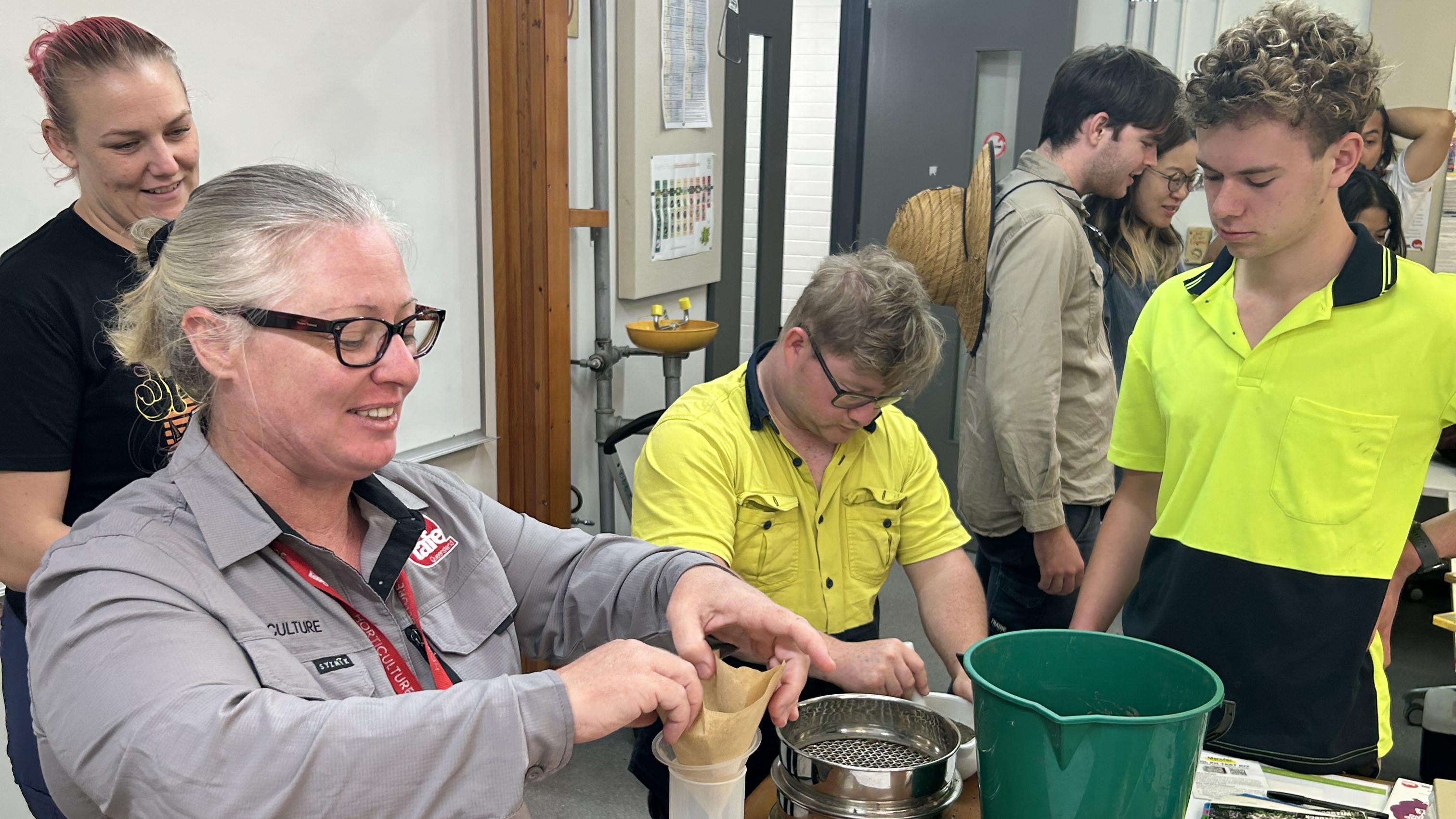
“Many ornamental plants will struggle in a slightly acidic soil; this is where native plants thrive,” Amy continued.
“If the pH isn’t right, plants can struggle to absorb nutrients, which can lead to poor growth and make them more susceptible to disease.”
Another key focus was understanding nutrient availability.
By adding distilled water to the soil samples, students were able to measure the minerals and salts that are available to plants for absorption.
This gives students a clearer picture of what plants can access and helps diagnose issues when plants are not performing well.
Students also completed a soil dispersion test, which examines how well soil holds together.
Healthy soil structure is essential in horticulture, as natural aggregates create spaces for air, water and beneficial microorganisms.
“You want those chunks and aggregates because they provide a home for microorganisms and help retain water and nutrients,” she said.
The Certificate III in Horticulture (AHC30722) equips students with a broad range of practical skills across plant identification and care, landscape management, propagation, pruning and fertilising to maintain gardens and nurseries.
Students also gain knowledge in improving soil conditions, implementing plant nutrition programs, operating machinery and equipment, and maintaining nursery plants.
With highly experienced teachers who remain strongly connected to industry, students receive the one-on-one guidance and hands-on training needed to succeed.
Successful completion of the course can lead to employment opportunities as a horticulturist across nurseries, parks and gardens.
By combining classroom theory with practical learning, TAFE Queensland is preparing students with industry-ready skills to help landscapes and communities flourish.