

The educator shaping tomorrow’s youth workers
As demand for skilled community services workers continues to grow, Casey is helping ensure future youth workers graduate with the practical skills, emotional awareness and professional confidence needed to step safely into the sector.
According to the Australian Government's Job Outlook service, the number of people working in community and welfare support is currently experiencing very strong growth, with this very large occupation expected to create around 19,000 job openings over the next five years.
That need has made Casey Vea Vea’s work at TAFE Queensland’s Townsville (Pimlico) campus increasingly important. Her practical, industry-connected delivery of the Certificate IV in Youth Work (CHC40421) has seen her build a reputation as one of North Queensland’s most respected youth work educators.
Now, her impact on vocational education and the youth work sector has seen her named VET Teacher or Trainer of the Year in the 2026 Queensland Training Awards (North Queensland Region).
Casey brings more than 20 years of frontline experience into the classroom, with a career spanning child protection, foster care, family support, complex trauma, youth-focused community services, and multidisciplinary work alongside Northern Territory Police and the Australian Federal Police through the Child Abuse Task Force.
Importantly, Casey has never stepped away from the sector. Alongside teaching, she continues to work with the Salvation Army, maintaining direct contact with the kinds of environments she is preparing her students to enter.
“You can’t teach this work well if you lose connection to the reality of it,” Casey says. “The sector changes constantly. The presentations change, the pressures change, the systems change. I think students deserve teachers who still understand what frontline practice actually looks like.”
That connection to industry shapes every part of her delivery.
Casey’s classes are built around practical applications, rather than theory-heavy lectures. Students unpack real scenarios, challenge assumptions, analyse case studies, and learn how to respond safely to situations involving trauma, domestic and family violence, mental health crises, alcohol and other drugs, grief, abuse, and high-risk behaviour.
She is known for creating a classroom culture that is honest, emotionally safe, and highly reflective.
“I tell students very early that youth work is not solely about wanting to help people,” Casey said. “You need boundaries, emotional awareness, critical thinking, and the ability to stay calm during difficult situations. Young people deserve workers who can hold space safely when things become complex.”
Her approach resonates strongly with students, many of whom bring lived experience into the classroom themselves.
Rather than avoiding those realities, Casey creates space for students to process them responsibly, using regular check-ins, trigger warnings, practical self-care strategies, and clear support pathways.
“I want students to face their emotional reactions here, in a supported environment – not for the first time when a young person is sitting in front of them disclosing trauma,” she said.
That balance between challenge and support has become one of Casey’s defining strengths as an educator.
TAFE Queensland students are also benefitting from Casey’s extensive industry networks, with guest speakers regularly embedded into delivery across the qualification.
Youth justice workers, domestic violence specialists, police, alcohol and other drug practitioners, mental health services, and youth organisations all contribute directly to classroom discussions, helping students understand the breadth of the sector and where their future pathways may lead.
“If we’re not listening to the sector, then we’re wasting everyone’s time,” Casey said. “Our job is to prepare students for what they’re actually walking into.”
That philosophy has also driven one of Casey’s biggest innovations – the development of a flexible Youth Work Refresher course designed specifically for organisations needing targeted professional development rather than full qualifications.
Topics such as duty of care, trauma-informed practice, and youth work foundations can now be delivered in customised formatted directly relevant to each organisation.
“It’s about meeting services where they are at,” Casey said. “Not every organisation needs generic training. Sometimes they need practical conversations around very specific issues their teams are navigating right now.”
Another major initiative has been Casey’s introduction of Youth Mental Health First Aid training in Townsville.
After completing facilitator accreditation in 2025, Casey launched the first local delivery in early 2026, attracting more than 20 professionals from Townsville, Ingham, and Mount Isa, including strong participation from First Nations workers.
The training equips participants to recognise and respond to emerging mental health concerns in young people aged 12 to 18, identify warning signs early, respond to crises, and reduce stigma.
For Casey, the value of the training is immediate and practical.
“Whether you work in schools, youth services, sport, community programs, or frontline support, you are going to encounter young people struggling with their mental health,” she said. “This gives workers the confidence to recognise what’s happening early and respond appropriately before things escalate.”
She is now working towards expanding the program through online delivery to improve access for workers in remote communities, including the Torres Strait.
For Casey, vocational education creates a ripple effect far beyond the classroom.
“I realised a long time ago that I could do good work myself with a small number of young people, or I could help train youth workers who go out and support hundreds more,” she said. “That’s the power of this work.”
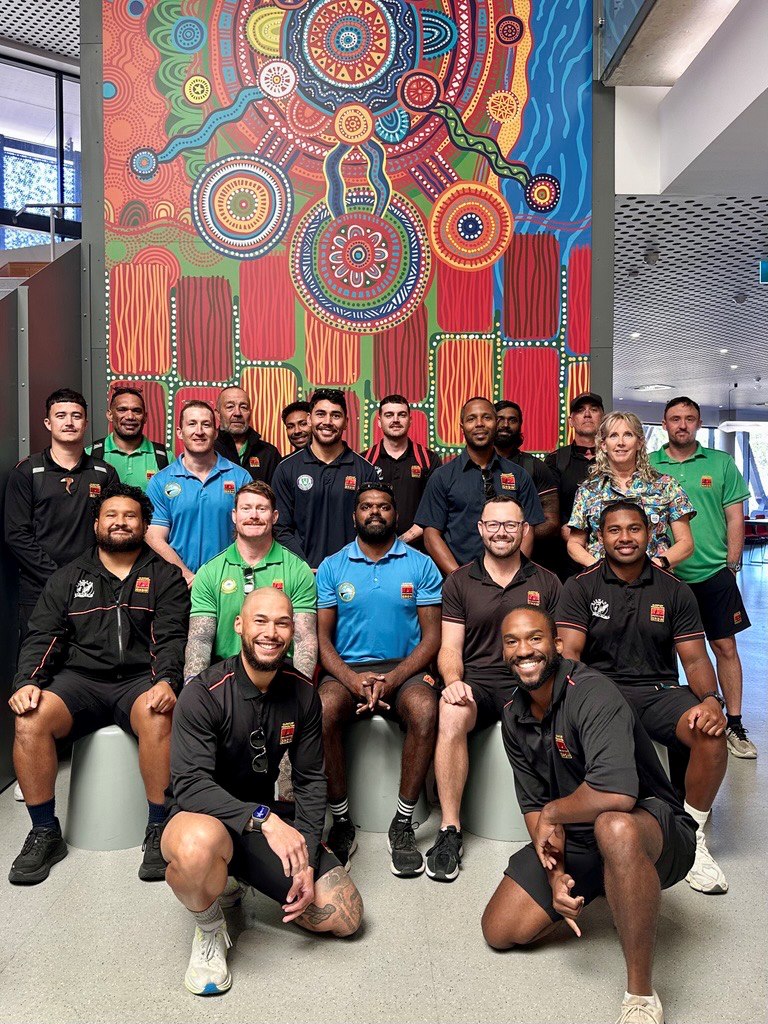
Casey Vea Vea delivering a de-escalation workshop to 18 Clontarf Foundation employees.
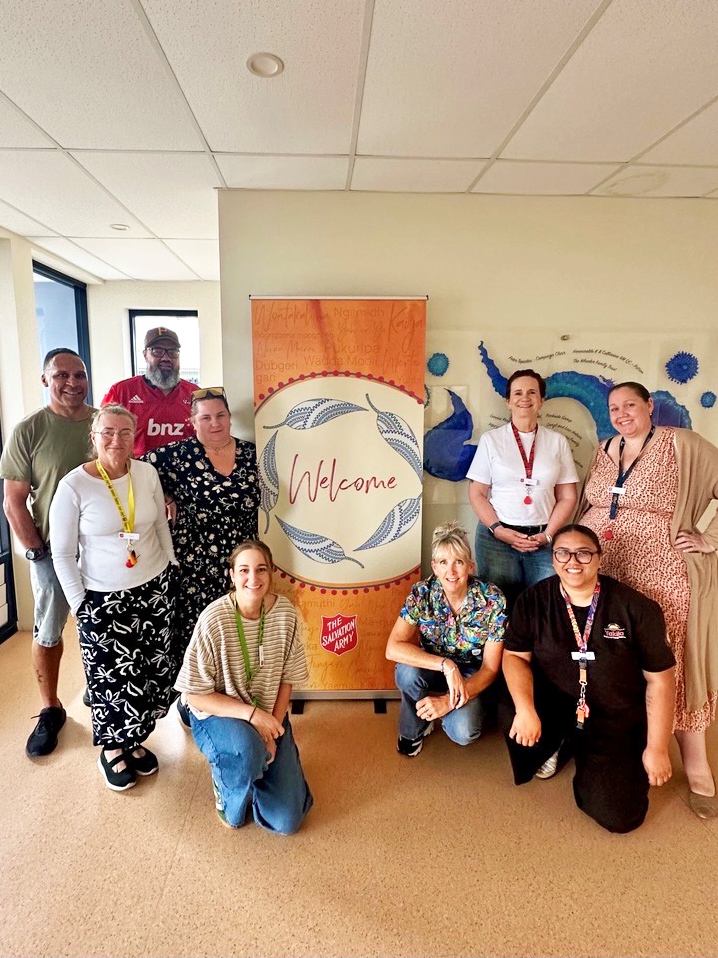
Casey Vea Vea delivering Youth Mental Health First Aid to youth and adult workers at The Salvation Army Queensland Townsville Recovery Service