Kat turns isolation into connection through peer work
After struggling to access mental health support in rural Australia, Kat Kinn turned her lived experience and TAFE Queensland training into a global peer support community.
After being diagnosed with post-traumatic stress disorder (PTSD) in 2021 and struggling to access care in her rural community, Katrina (Kat) Kinn was motivated to create a support service for others facing the same barriers.
Wanting to strengthen that service and learn how to support people safely and professionally, Kat moved from rural northern New South Wales to the Gold Coast to study the Certificate IV in Mental Health Peer Work (CHC43515) at TAFE Queensland’s Southport campus.
Kat’s career before mental health peer work took her through several very different environments.
She worked as a federal law enforcement officer on a Counterterrorism First Response Team at Sydney Airport before touring with Cirque du Soleil productions including OVO, KURIOS and LUZIA.
When the COVID-19 pandemic closed the entertainment industry, Kat accepted an opportunity to work on a remote cattle station, where she experienced a traumatic incident and developed PTSD.
With limited mental health services nearby and long distances separating Kat from her psychologist and other supports, accessing treatment proved difficult.
“While alone in the isolation of my rural home I knew I needed support and I knew I couldn’t be the only person experiencing these difficulties,” she said.
“I thought there needs to be something that people in similar circumstances can access support.”
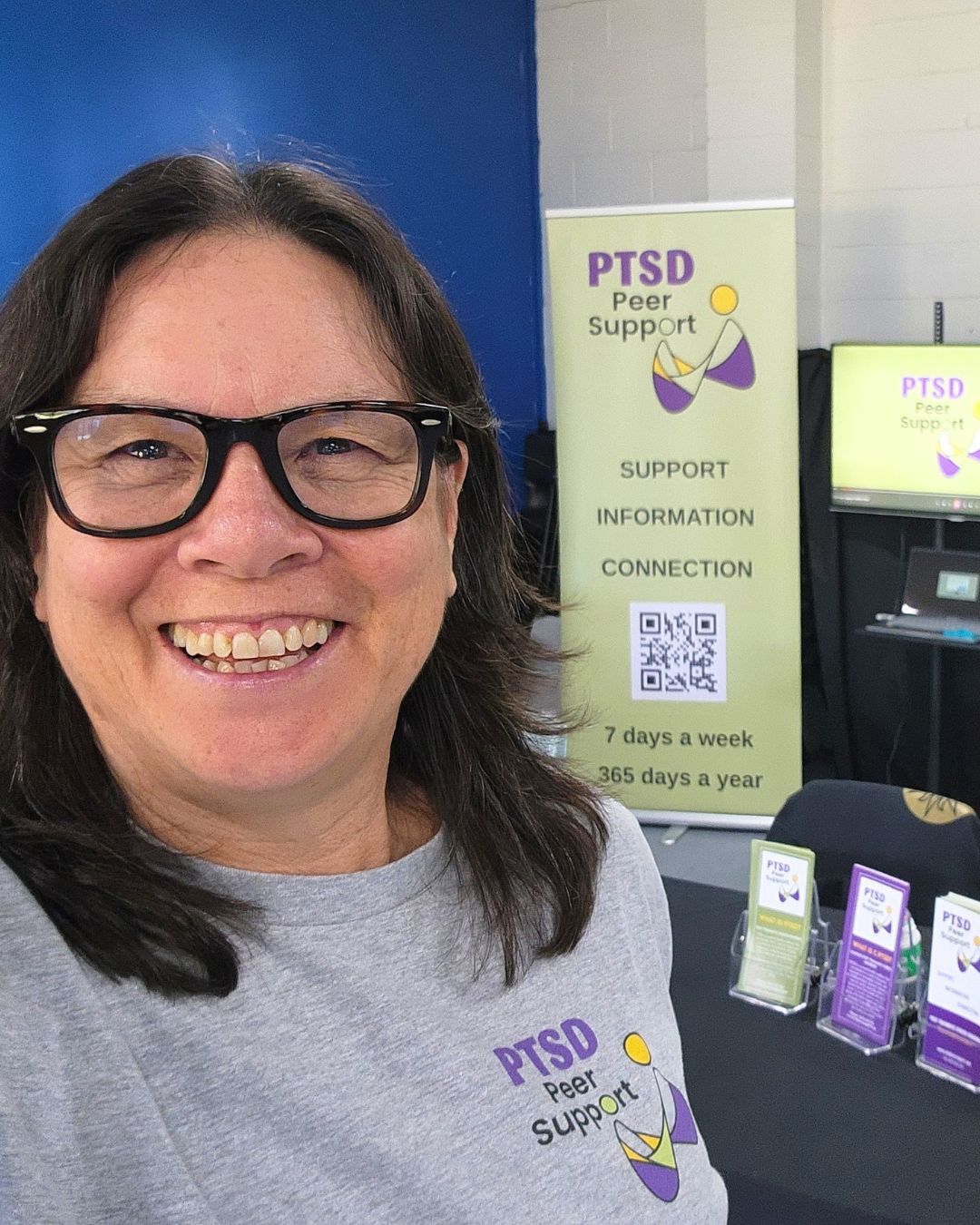
That idea became PTSD Peer Support, a free service offering daily online meet-ups for people living with PTSD and complex PTSD.
The meet-ups explore evidence-based wellness topics and give participants a safe space to share their experiences, celebrate achievements and support one another through recovery.
Over the past two years, PTSD Peer Support has held more than 800 free online meet-ups, reaching people across Australia and around the world.
The experience motivated Kat to pursue formal training and deepen her understanding of trauma-informed peer work.
Although she could study online closer to home, Kat chose to relocate to attend classes in person at Southport campus.
“I wanted to study face to face to help reduce my isolation,” Kat said.
“Connecting with others is good for mental health and I knew everyone on the course would have lived experience, so that was also a bonus to me.”
Kat said her teachers encouraged students to apply peer work principles from the beginning of the course, creating a supportive environment where classmates helped one another through the challenges of study.
“I genuinely looked forward to going to class every week and being a part of the student group,” she said.
Learning from teachers with their own lived experience also gave Kat a clearer understanding of how course theory applies in professional settings.
“They can translate the course theory into real world application,” she said.
Through subjects including trauma-informed care, grief, motivational interviewing and peer work principles, Kat learned how lived experience can be shared safely and purposefully.
She developed skills in professional boundaries, consent, emotional regulation and reflective practice, as well as learning how to recognise when sharing her experience could support recovery, reduce shame or build connection.
“The trauma informed approach taught me how to speak in a way that prioritises safety, consent and to go at the pace of the person seeking support,” she said.
The course also brought personal benefits Kat had not anticipated.
“By the end of the course, I had a deeper self-compassion and confidence which in turn improved my own self-care and self-esteem,” she said.
“These are bonuses of studying the course that I didn’t expect.”
Since graduating, Kat has applied her TAFE Queensland training to PTSD Peer Support, refining the service to better align with professional peer work principles.
She has also become more confident speaking with clinical staff, advocating for people seeking support and building relationships across the mental health sector.
“I am so much more confident than I expected to feel from studying,” Kat said.
“This confidence is important in my business, especially when advocating for a person seeking support or building collaboration opportunities and networking within the industry.”
Kat is now developing a PTSD peer support coaching and mentoring program and consulting with industry organisations about peer work practice.
For anyone considering studying mental health peer work, her advice is to give it a chance and ask for support when it is needed.
“I thought to myself, 12 months is going to come to pass whether I am studying or not, so I may as well give study a go.”