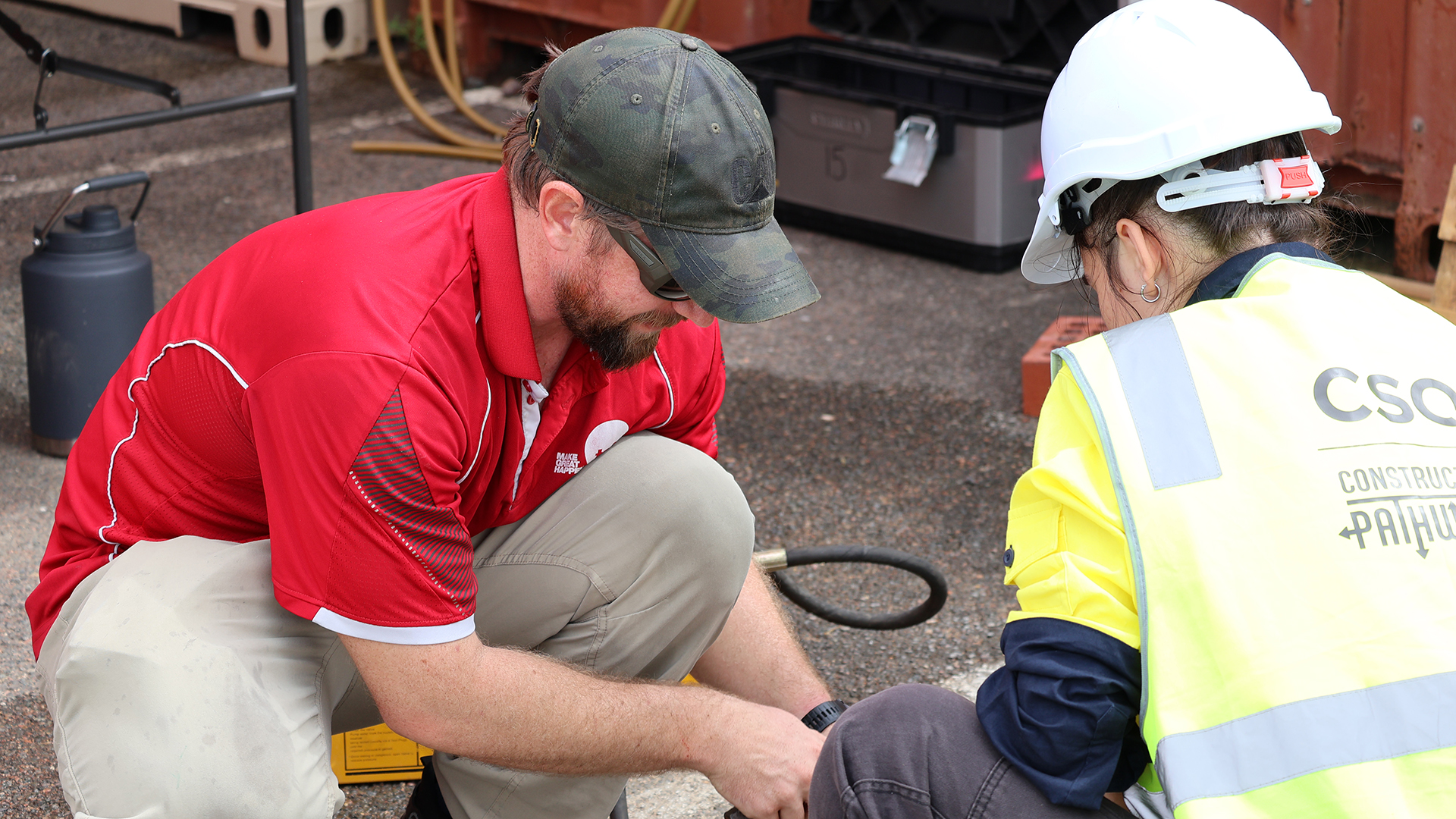
Reshaping plumbing training from the ground up
In just over two years, Justin Carty has become a standout educator across TAFE Queensland’s plumbing team, helping modernise practical delivery, strengthen digital teaching practices, and improve how apprentices engage with complex trade concepts.
When Justin Carty stepped into teaching at TAFE Queensland’s Townsville Trade Training Centre (Bohle) campus, he has brought the structure, discipline and leadership mindset shaped throughout a career in Defence.
Before entering VET, Justin completed his plumbing apprenticeship in Brisbane, established his own business, and later joined Defence, where he served in operational and leadership roles.
He has now been recognised through his selection as a finalist in the 2026 Queensland Training Awards (North Region) for VET Teacher or Trainer of the Year, alongside being awarded TAFE Queensland North region’s Great Ideas staff award.
Justin delivers across Certificate II in Plumbing Services (11054NAT), Certificate III in Plumbing (CPC32420), and Certificate IV in Plumbing and Services (Operations) (CPC40920), supporting students from first exposure to the trade through to advanced technical training.
With the Australian Government’s Job Outlook service forecasting up to 50,000 job openings for plumbers over the next five years, Justin’s focus is firmly on making training practical, current and closely connected to the realities of the trade.
Justin has redesigned major areas of plumbing theory and practical training, particularly across sanitary and fire services delivery, by linking standards, CAD drawings, workshop activities and real trade application.
Apprentices often draw systems before building them, helping them visualise layouts, identify problems early and understand how systems function in practice.
“If students can picture it first, they’re far more confident when they step into the workshop,” Justin said, “It reduces confusion and helps the learning stick.”
His use of AutoCAD has become one of his strongest innovations, helping apprentices understand complex concepts such as sectional drawings, jump-ups, solar hot water systems and commercial layouts.
Justin has also introduced new fire service practicals involving roll grooving, threading and ring main bypass work – training designed to better reflect current industry expectations.
“The biggest things for me is relevance,” he said. “If apprentices can see how training connects directly to what happens on site, engagement changes completely.”
Justin has also become a trusted resource for other educators, sharing digital strategies that help teachers connect with students, track progress and capture practical evidence in real time.
“It makes the assessment feel more authentic because students are capturing evidence while they’re actually doing the work,” Justin said. “It also builds their confidence using digital systems they’ll encounter throughout industry.”
Alongside teaching full-time, Justin is currently completing a Bachelor of Adult Education, using the study to further refine how he approaches leaner engagement, communication and classroom delivery.
“I never want to get comfortable teaching the same way forever,” he said. “You should always be improving the way you explain things, structure lessons and support different learners.”
He is particularly focused on helping apprentices develop professional standards alongside technical skills.
“At the start, I tell students they’re representing themselves, their employer and their trade,” Justin said. “Skills matter, but attitude and professionalism matter too.”
Those expectations are paired with strong encouragement and support.
“TAFE’s a place to make mistakes and learn from them,” he said. “You’re not expected to get everything perfect right away. The important thing is that you keep improving.”
“You want young people leaving better prepared, more capable and more confident than when they arrived. That’s the goal every day.”