

Inherent requirements - maritime
Before deciding if a course is right for you, it's important to make an informed choice and consider the key skills, knowledge, and assessment requirements involved.


Review the below inherent requirements for the course and reflect on whether any of these might present difficulties for you, and if they align with your abilities and goals. If you feel you may have challenges due to a disability, a health condition, or for any other reason, we encourage you to speak with a regional Education Manager, a student services team member, or the regional AccessAbility Officer to discuss your concerns and confirm if the course is suitable for you.
Reasonable adjustments may be available to support students who feel they need assistance with learning and assessments in their studies. Students are advised that TAFE Queensland, however, cannot mandate that industry provides reasonable adjustments in the workplace to accommodate personal preferences or support needs. Adherence to industry standards and national guidelines is essential and must be demonstrated consistently during practical assessment. Students are also advised that any reasonable adjustment cannot alter the integrity or objective of an assessment.
Before deciding if a course is right for you, it’s important to make an informed choice and consider the key skills, knowledge, assessment, licensing and physical requirements involved. Review the inherent requirements for this course and reflect on whether any of them might present difficulties for you. If you feel you may have challenges due to a disability, a health condition, or for any other reason, we encourage you to speak with a regional Faculty Management, a student services team member, or the regional AccessAbility Officer to discuss your concerns and confirm if the course is suitable for you.
AMSA Licensing requirements
This course helps you meet some of the requirements needed to apply for an AMSA licence.
To ensure you're fully prepared:
- Visit the AMSA website to understand all additional licensing requirements and application costs. https://www.amsa.gov.au/qualifications-training/international-qualifications/integrated-rating
- Medical certificate - although a medical certificate is not required to complete the course at TAFE, students who intend to apply for AMSA certification should be aware that AMSA licensing requirements include holding a valid medical certificate. If you are planning to become certified, it may be advisable to confirm that you can meet these medical standards before enrolling.
- You must be at least 18 years old at the time you complete your training to be eligible to apply for an AMSA licence.
Tasks and Guided Study Books (TAGS Books) – AMSA requirement
Successful completion of this qualification is currently recognised as meeting part of the requirements for AMSA certification as Able Seafarer Deck, Able Seafarer Engine, and Integrated Rating.
You should be aware that AMSA certification involves additional requirements beyond the training itself. One of these is the completion of mandatory sea time and the tasks outlined in the TAGS books, which are issued, reviewed, and endorsed by TAFE Queensland. TAGS booklets are included in your course fees. If a booklet needs to be reissued, an additional fee will apply.
Please visit the Career pathways for ratings on the AMSA website for additional details.
Physical fitness requirements
To ensure safety and success during practical maritime training, it is recommended that you possess an intermediate level of physical fitness. These requirements are essential for participating in onboard training and emergency preparedness exercises.
This includes the ability to:
- lift and carry equipment safely (up to 20-25kg)
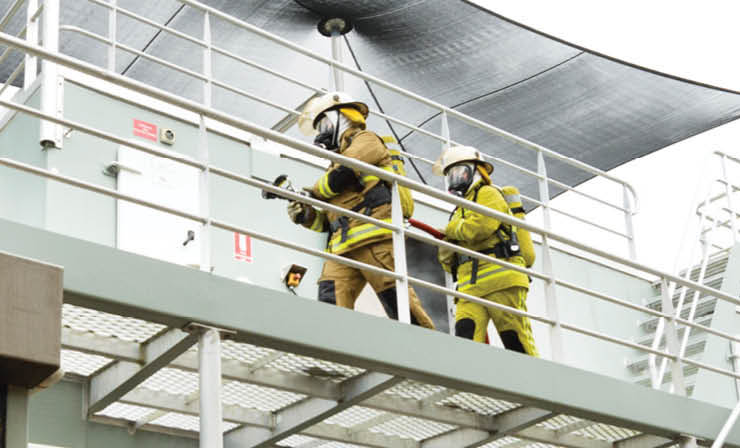
- climb ladders and access various parts of a vessel
- perform physically demanding tasks in dynamic marine environments
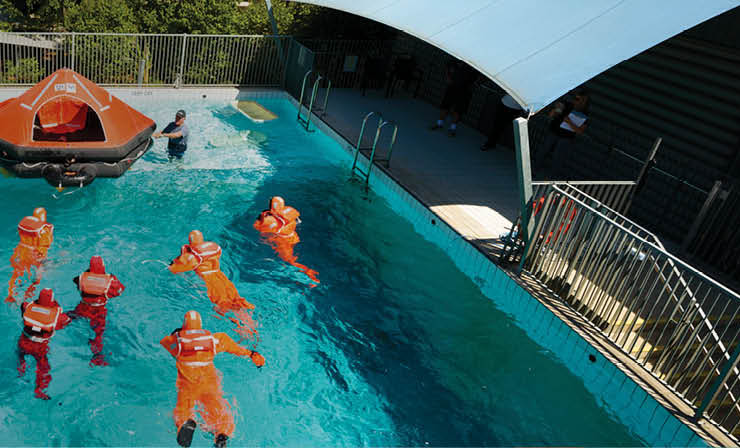
- pull yourself unaided into a life raft while wearing a life jacket .
Pool and swimming abilities
You must be able to swim to a level that will enable you to:
- remain afloat without a life jacket for 5 minutes
- right an inverted life raft
- safely jump from a height into water
- swim while wearing a life jacket.
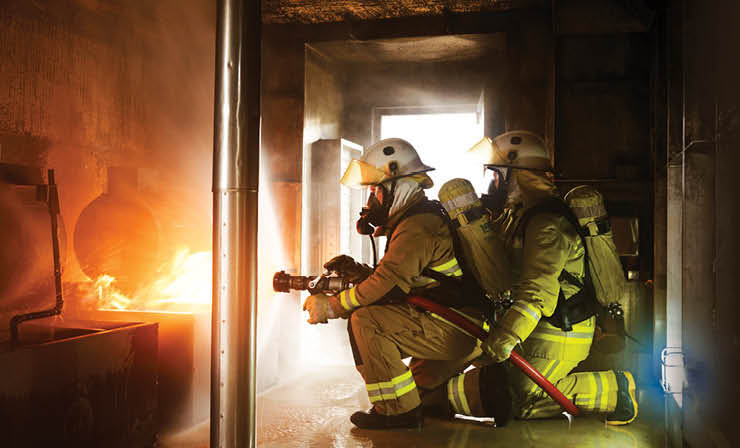
Firefighting and heat conditions
You must be aware of and able to meet the physical demands involved in maritime firefighting and emergency response training. This includes the ability to:
- don and operate self-contained breathing apparatus (SCBA) in a heated, smoke filled compartment
- wear and work in a firefighting outfit in tropical and high heat conditions
- perform fire extinguishment and rescue tasks in hot environments
- work safely in confined spaces within the maritime emergency training simulator
- understand that if you have asthma or other respiratory conditions you may face increased physical demands when exposed to heat, smoke, and SCBA use.
Working in confined spaces
You should be aware that training will involve working in confined spaces as part of practical activities and assessments.
Working at heights
You should be aware that the training will require you to complete tasks in elevated environments.
Welding, cutting and hot work
You should be aware that training will involve welding, cutting, and other hot work activities, including the requirement to use of a full face welding mask.
Before deciding if a course is right for you, it’s important to make an informed choice and consider the key skills, knowledge, assessment, licensing and physical requirements involved. Review the inherent requirements for this course and reflect on whether any of them might present difficulties for you. If you feel you may have challenges due to a disability, a health condition, or for any other reason, we encourage you to speak with a regional Faculty Management, a student services team member, or the regional AccessAbility Officer to discuss your concerns and confirm if the course is suitable for you.
AMSA licensing requirements
This course helps you meet some of the requirements needed to apply for an AMSA licence.
To ensure you're fully prepared:
- visit the AMSA website to understand all additional licensing requirements and application costs
- how to revalidate your STCW certificate – see section Choose the right training courses – without qualifying sea service.
International and non‑AMSA certification holders
The course may also be suitable for seafarers with international certificates under overseas regulators who need refresher training and do not meet sea service requirements for STCW continued competence.
- You will need to provide evidence of your current STCW certifications as part of the application process for this course.
- You are responsible for confirming that this course meets the continued competence, revalidation, or regulatory requirements of the maritime authority under which you are certified or operating.
Physical fitness
To ensure safety and success during practical maritime training, it is recommended that you possess an intermediate level of physical fitness. These requirements are essential for participating in onboard training and emergency preparedness exercises.
This includes the ability to:
- lift and carry equipment safely (up to 20-25kg)
- climb ladders and access various parts of a vessel
- perform physically demanding tasks in dynamic marine environments
- pull yourself unaided into a life raft while wearing a life jacket .
Firefighting and heat conditions
You must be aware of and able to meet the physical demands involved in maritime firefighting and emergency response training. This includes the ability to:
- don and operate self‑contained breathing apparatus (SCBA) in a heated, smoke‑filled compartment
- wear and work in a firefighting outfit in tropical and high‑heat conditions
- perform fire extinguishment and rescue tasks in hot environments
- work safely in confined spaces within the maritime emergency training simulator
- understand that if you have asthma or other respiratory conditions you may face increased physical demands when exposed to heat, smoke, and SCBA use.
Pool and swimming abilities
You must be able to swim to a level that will enable you to:
- remain afloat without a life jacket for 5 minutes
- right an inverted life raft
- safely jump from a height into water
- swim while wearing a life jacket
- swim while wearing an immersion suit and life jacket.
Before deciding if a course is right for you, it’s important to make an informed choice and consider the key skills, knowledge, assessment, licensing and physical requirements involved. Review the inherent requirements for this course and reflect on whether any of them might present difficulties for you. If you feel you may have challenges due to a disability, a health condition, or for any other reason, we encourage you to speak with a regional Faculty Management, a student services team member, or the regional AccessAbility Officer to discuss your concerns and confirm if the course is suitable for you.
AMSA Licensing requirements
This course helps you meet some of the requirements needed to apply for an AMSA licence.
To ensure you're fully prepared:
- visit the AMSA website to understand all additional licensing requirements and application costs https://www.amsa.gov.au/qualifications-training/international-qualifications/certificate-safety-training
- you will need to apply to AMSA for certification once training is complete
- you must be at least 16 years old at the time you complete your training to be eligible to apply for an AMSA licence
- many vessels require proof that you are medically fit to safely carry out all onboard duties. In some instances, AMSA also require a medical certificate.
Physical fitness
To ensure safety and success during practical maritime training, it is recommended that you possess an intermediate level of physical fitness. These requirements are essential for participating in onboard training and emergency preparedness exercises.
This includes the ability to:
- lift and carry equipment safely (up to 20-25kg)
- climb ladders and access various parts of a vessel
- perform physically demanding tasks in dynamic marine environments
- pull yourself unaided into a life raft while wearing a life jacket .
Firefighting and heat conditions
You must be aware of and able to meet the physical demands involved in maritime firefighting and emergency response training.
This includes the ability to:
- don and operate self-contained breathing apparatus (SCBA) in a heated, smoke filled compartment
- wear and work in a firefighting outfit in tropical and high heat conditions. Perform fire extinguishment and rescue tasks in hot environments
- work safely in confined spaces within the maritime emergency training simulator
- understand that if you have asthma or other respiratory conditions you may face increased physical demands when exposed to heat, smoke, and SCBA use.
Pool and swimming abilities
You must be able to swim to a level that will enable them to:
- remain afloat without a life jacket for 5 minutes
- right an inverted life raft
- safely jump from a height into water
- swim while wearing an immersion suit and life jacket.
Digital literacy
You should be comfortable using digital technology. This includes accessing and navigating the online learning management system (LMS), submitting assessments electronically, communicating via email, and using basic software and internet browsers.
Certificate courses may require further skills, such as working with Word or Excel, managing files, and independently troubleshooting simple technical issue.
Before deciding if a course is right for you, it’s important to make an informed choice and consider the key skills, knowledge, assessment, licensing and physical requirements involved. Review the inherent requirements for this course and reflect on whether any of them might present difficulties for you. If you feel you may have challenges due to a disability, a health condition, or for any other reason, we encourage you to speak with a regional Faculty Management, a student services team member, or the regional Accessibility Officer to discuss your concerns and confirm if the course is suitable for you.
AMSA licensing requirements
This course helps you meet some of the requirements for an AMSA endorsement.
To ensure you're fully prepared:
- Visit the AMSA website to understand additional endorsement requirements, application costs, and qualifying sea service needed to apply for your endorsement once you have successfully completed the training. On the AMSA page specifically review the section titled Survival Craft and Rescue Boats other than Fast Rescue Boats. See also Seafarer form 419.
- You must be at least 18 years old at the time you complete your training to be eligible to apply for an AMSA licence.
International - non‑AMSA certification holders
The course may also be suitable for seafarers with international certificates under overseas regulators You must confirm it meets the maritime regulator’s requirements under which you are certified or operating.
- You will need to provide copy evidence of a current STCW certifications as part of the application process for this course.
Physical fitness
To ensure safety and success during practical maritime training, it is recommended that you possess an intermediate level of physical fitness. These requirements are essential for participating in onboard training and emergency preparedness exercises.
This includes the ability to:
- lift and carry equipment safely (up to 20-25kg)
- climb ladders and access various parts of a vessel
- perform physically demanding tasks in dynamic marine environments
- pull yourself unaided into a life raft while wearing a life jacket .
Pool and swimming abilities
You must be able to swim to a level that will enable you to:
- remain afloat without a life jacket for 5 minutes
- right an inverted life raft
- safely jump from a height into water
- swim while wearing a life jacket.
Digital literacy
You should be comfortable using digital technology. This includes accessing and navigating the online learning management system (LMS), submitting assessments electronically, communicating via email, and using basic software and internet browsers.
Before deciding if a course is right for you, it’s important to make an informed choice and consider the key skills, knowledge, assessment, licensing and physical requirements involved. Review the inherent requirements for this course and reflect on whether any of them might present difficulties for you. If you feel you may have challenges due to a disability, a health condition, or for any other reason, we encourage you to speak with a regional Faculty Management, a student services team member, or the regional AccessAbility Officer to discuss your concerns and confirm if the course is suitable for you.
AMSA Licensing requirements
This course helps you meet some of the requirements needed to apply to revalidate your AMSA and international qualifications
To ensure you're fully prepared:
- visit the AMSA website to understand all additional licensing requirements applicable to your and application costs
- International (STCW) qualifications
- how to revalidate your STCW certificate
- you will need to provide a copy of your current Certificate of Competency (Master/Deck/Engineering officers) or Certificate of Proficiency as Chief Integrated Rating.
International and non‑AMSA certification holders
This course may support refresher training aligned to STCW continued competence outcomes for holders of international certificates.
- You will need to provide a copy evidence of a current Certificate of Competency (Students with international certifications) as part of the application process for this course
- You are responsible for confirming that this course meets the continued competence, revalidation, or regulatory requirements of the maritime authority under which you are certified or operating, including where you are not currently working on Australian‑flagged vessels or have not completed AMSA revalidation.
Physical fitness
To ensure safety and success during practical maritime training, it is recommended that you possess an intermediate level of physical fitness. These requirements are essential for participating in onboard training and emergency preparedness exercises.
This includes the ability to:
- lift and carry equipment safely (up to 20-25kg)
- climb ladders and access various parts of a vessel or simulated vessel
- perform physically demanding tasks in dynamic marine environments
- pull yourself unaided into a life raft while wearing a life jacket .
Firefighting and heat conditions
You must be aware of and able to meet the physical demands involved in maritime firefighting and emergency response training. This includes the ability to:
- don and operate self contained breathing apparatus (SCBA) in a heated, smoke filled compartment
- wear and work in a firefighting outfit in tropical and high heat conditions
- perform fire extinguishment and rescue tasks in hot environments
- work safely in confined spaces within the maritime emergency training simulator
- understand that if you have asthma or other respiratory conditions you may face increased physical demands when exposed to heat, smoke, and SCBA use.
Pool and swimming abilities
You must be able to swim to a level that will enable you to:
- remain afloat without a life jacket for 5 minutes
- right an inverted life raft
- safely jump from a height into water
- swim while wearing a life jacket
- swim while wearing an immersion suit and life jacket.
This course helps you meet some of the requirements needed to apply for an AMSA licence.
To ensure you're fully prepared:
- visit the AMSA website to understand all additional licensing requirements and application costs
- International (STCW) Qualifications
- how to revalidate your STCW certificate
- you will need to provide a copy of your current Certificate of Competency (IR/Able Seaman/Deck Rating/Engine Room Rating) as part of the application process for this course.
International and non‑AMSA certification holders
The course may also be suitable for seafarers with international certificates under overseas regulators who need refresher training to meet the requirements for STCW continued competence.
- You will need to provide a copy evidence of a current Certificate of Proficiency as part of the application process for this course.
- You are responsible for confirming that this course meets the continued competence, revalidation, or regulatory requirements of the maritime authority under which you are certified or operating.
Physical fitness
To ensure safety and success during practical maritime training, it is recommended that you possess an intermediate level of physical fitness. These requirements are essential for participating in onboard training and emergency preparedness exercises.
This includes the ability to:
- lift and carry equipment safely (up to 20-25kg)
- climb ladders and access various parts of a vessel
- perform physically demanding tasks in dynamic marine environments
- pull yourself unaided into a life raft while wearing a life jacket .
Firefighting and heat conditions
You must be aware of and able to meet the physical demands involved in maritime firefighting and emergency response training. This includes the ability to:
- don and operate self‑contained breathing apparatus (SCBA) in a heated, smoke‑filled compartment
- wear and work in a firefighting outfit in tropical and high‑heat conditions
- perform fire extinguishment and rescue tasks in hot environments
- work safely in confined spaces within the maritime emergency training simulator
- understand that if you have asthma or other respiratory conditions you may face increased physical demands when exposed to heat, smoke, and SCBA use.
Pool and swimming abilities
You must be able to swim to a level that will enable you to:
- remain afloat without a life jacket for 5 minutes
- right an inverted life raft
- safely jump from a height into water
- swim while wearing a life jacket
- swim while wearing an immersion suit and life jacket.
This course helps you meet some of the requirements needed to apply for an AMSA licence.
To ensure you're fully prepared:
- visit the AMSA website to understand all additional licensing requirements and application costs
- how to revalidate your STCW certificate see sections - Choose the right training courses – with qualifying sea service
International and non‑AMSA certification holders
The course may also be suitable for seafarers with international certificates under overseas regulators who need refresher training to meet the requirements for STCW continued competence.
- You will need to provide a copy evidence of a current STCW certifications as part of the application process for this course.
- You are responsible for confirming that this course meets the continued competence, revalidation, or regulatory requirements of the maritime authority under which you are certified or operating.
Physical fitness
To ensure safety and success during practical maritime training, it is recommended that you possess an intermediate level of physical fitness. These requirements are essential for participating in onboard training and emergency preparedness exercises.
This includes the ability to:
- lift and carry equipment safely (up to 20-25kg)
- climb ladders and access various parts of a vessel
- perform physically demanding tasks in dynamic marine environments
- pull yourself unaided into a life raft while wearing a life jacket.
Firefighting and heat conditions
You must be aware of and able to meet the physical demands involved in maritime firefighting and emergency response training. This includes the ability to:
- don and operate self‑contained breathing apparatus (SCBA) in a heated, smoke‑filled compartment
- wear and work in a firefighting outfit in tropical and high‑heat conditions
- perform fire extinguishment and rescue tasks in hot environments
- work safely in confined spaces within the maritime emergency training simulator
- understand that if you have asthma or other respiratory conditions you may face increased physical demands when exposed to heat, smoke, and SCBA use.
Pool and swimming abilities
You must be able to swim to a level that will enable you to:
- remain afloat without a life jacket for 5 minutes
- right an inverted life raft
- safely jump from a height into water
- swim while wearing a life jacket
- swim while wearing an immersion suit and life jacket.